
Are you worried that bed bugs might be hiding in your clothes? These tiny pests can cause big problems, from itchy bites to sleepless nights.
But don’t panic—getting rid of bed bugs in your clothes is easier than you think. You’ll discover simple, effective steps to protect your wardrobe and keep your home bug-free. Keep reading, because the solution to your bed bug problem is just a few easy actions away.
Credit: www.yumpu.com
Identifying Bed Bugs In Clothes
Bed bugs in clothes can cause serious problems. They hide well and are hard to spot. Early identification helps stop them before they spread. Knowing what to look for saves time and stress.
Signs Of Infestation
Small reddish or brown spots on clothes may appear. These spots are bed bug droppings or crushed bugs. Tiny eggs or shed skins might be visible too. Clothes may smell musty or sweet in some cases. Bites on your skin can also hint at bed bugs nearby.
Common Hiding Spots
Look inside seams and folds of clothes first. Bed bugs hide in tight places close to the skin. Pockets and collars are favorite spots for them. Check inside bags or laundry baskets where clothes sit. Bugs might also hide in drawers or closets near clothes.
Preparing Clothes For Treatment
Preparing clothes for bed bug treatment is a key step to remove these pests effectively. Proper preparation helps stop bed bugs from spreading to other items. It also makes treatment work better and faster. Follow simple steps to get your clothes ready for cleaning or other methods.
Sorting And Inspecting
Start by sorting clothes by type and color. Separate delicate fabrics from sturdy ones. This prevents damage during washing or heat treatment. Check each piece carefully. Look for small dark spots or tiny bugs. Pay close attention to seams and folds. Sorting helps you find infested clothes and treat them properly.
Handling Infested Items Safely
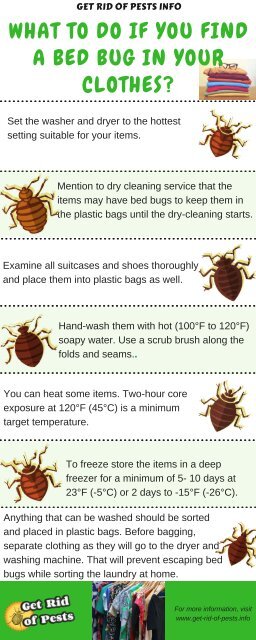
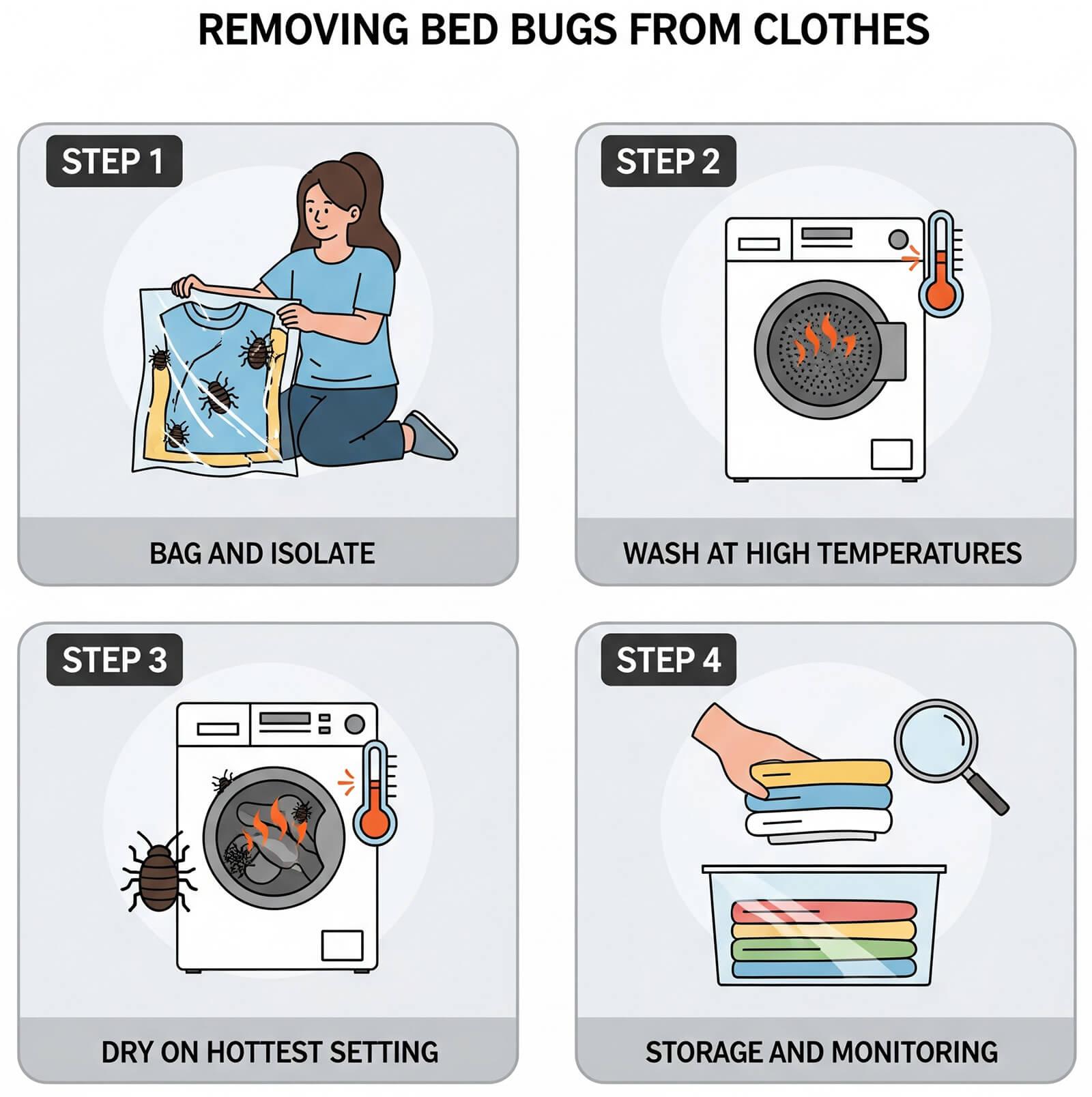
Wear gloves when handling infested clothes. Avoid shaking or dropping items. This stops bed bugs from spreading in your home. Place infested clothes in sealed plastic bags. Use separate bags for clean and dirty items. Label bags if needed. Keep bags away from other belongings until treatment. Safe handling reduces the risk of spreading bugs further.
Washing Techniques To Eliminate Bed Bugs
Washing clothes is a key step to remove bed bugs. Proper washing kills bugs and their eggs. Use the right methods to clean clothes effectively. Follow simple steps to ensure no bugs survive in your laundry.
Using Hot Water
Bed bugs die at high temperatures. Wash clothes in water at least 120°F (49°C). Hot water kills bugs and eggs quickly. Cold water does not remove bed bugs. Use the hottest water safe for your fabric.
Effective Detergents
Choose strong detergents for better cleaning. Some detergents help remove bed bugs and dirt. Avoid gentle or mild detergents alone. Use enough detergent to cover all clothes well. This improves the chance of killing bugs.
Drying At High Heat
Dry clothes on high heat for 30 minutes or more. The heat kills any bugs left after washing. Air drying or low heat may not work. Check fabric labels but use the highest safe heat. This step completes the bed bug removal process.
.png?r=RGXqEV3/M/U=)
Credit: plunketts.net
Non-wash Methods For Sensitive Fabrics
Some clothes cannot go into the washing machine. Delicate fabrics need gentle care to avoid damage. Non-wash methods help remove bed bugs without harsh treatment. These methods keep your clothes safe and clean.
Here are effective ways to treat sensitive fabrics for bed bugs.
Freezing Clothes
Bed bugs cannot survive extreme cold. Place your clothes in a sealed plastic bag. Put the bag in the freezer for at least 4 days. Make sure the temperature is below 0°F (-18°C). This kills bed bugs and their eggs safely. After freezing, let clothes return to room temperature before use.
Steam Treatment
Steam kills bed bugs on contact. Use a handheld steamer for best results. Slowly move the steamer over the fabric surface. Keep the steam at a temperature above 120°F (49°C). Avoid soaking the fabric with water. Steam dries quickly and does not harm delicate materials.
Using Bed Bug Sprays Safely
Choose sprays labeled safe for fabrics. Test a small hidden area first. Spray lightly to avoid wetting the fabric. Use sprays that contain natural ingredients if possible. Follow all instructions on the label carefully. Allow clothes to dry completely before wearing or storing.
Preventing Future Infestations
Preventing future bed bug infestations is key to keeping your clothes safe and clean. Taking simple steps can stop these pests from returning. Careful habits help protect your wardrobe and home.
Proper Storage Solutions
Store clothes in sealed plastic bags or containers. Avoid cardboard boxes, as bugs hide in them easily. Keep storage areas clean and dry to reduce hiding spots. Use airtight bags for off-season clothes. This blocks bugs from reaching your garments.
Regular Inspection Tips
Check clothes often for signs of bed bugs. Look for small dark spots or shed skins. Inspect seams, pockets, and folds closely. Early detection stops infestations from spreading. Wash and dry clothes on high heat if needed.
Travel Precautions
Keep luggage off the bed and floor during trips. Use hard-sided suitcases instead of fabric bags. Inspect hotel rooms for bed bugs before unpacking. Wash all clothes in hot water after returning home. This kills any hitchhiking bugs.
Credit: www.bedbugexterminatorpro.ca
When To Seek Professional Help
Dealing with bed bugs in clothes can be tough. Sometimes, home methods are not enough. Knowing when to get professional help saves time and stops the bugs fast. Professionals have tools and knowledge to handle big problems. Below are key points to help you decide.
Signs Of Severe Infestation
Small bites on your skin may mean bed bugs. But many bites and red marks show a serious problem. Finding bugs in many clothes or rooms means the bugs spread a lot. Dark spots or blood stains on clothes or sheets also warn of a large infestation. When bugs hide in many places, you need experts to stop them.
Choosing A Pest Control Service
Pick a pest control service with good reviews and experience. Check if the company uses safe and effective methods. Ask about their treatment plan and how long it takes. Make sure they inspect your clothes and home thoroughly. A clear price and guarantee show trust and quality. Experts help remove bugs faster and protect your clothes.
Frequently Asked Questions
How Can I Kill Bed Bugs In Clothes Effectively?
To kill bed bugs in clothes, wash them in hot water above 120°F. Then, dry on high heat for at least 30 minutes. Heat destroys all life stages of bed bugs, ensuring complete elimination from fabrics.
Can Freezing Clothes Remove Bed Bugs Safely?
Freezing clothes can kill bed bugs if exposed to temperatures below 0°F for 4 days. This method is effective but slower than heat treatment. Use sealed bags to prevent bugs from escaping during freezing.
Is Dry Cleaning A Good Option For Bed Bug Removal?
Dry cleaning kills bed bugs using high heat and chemicals. It is effective for delicate or non-washable items. Always inform the cleaner about the bed bug issue for proper treatment.
How To Prevent Bed Bugs From Infesting Clothes Again?
Store clothes in sealed plastic bags or airtight containers. Regularly wash and dry clothes on high heat. Inspect luggage and clothes after travel to avoid bringing bed bugs home.
Conclusion
Getting rid of bed bugs in clothes takes patience and care. Wash clothes in hot water and dry them on high heat. Seal clean clothes in bags to keep bugs away. Check all items carefully before storing. Repeat cleaning steps if needed to stop bugs.
Stay calm and act fast to protect your clothes. Small steps lead to big results in pest control. Keep your clothes safe and your home clean.