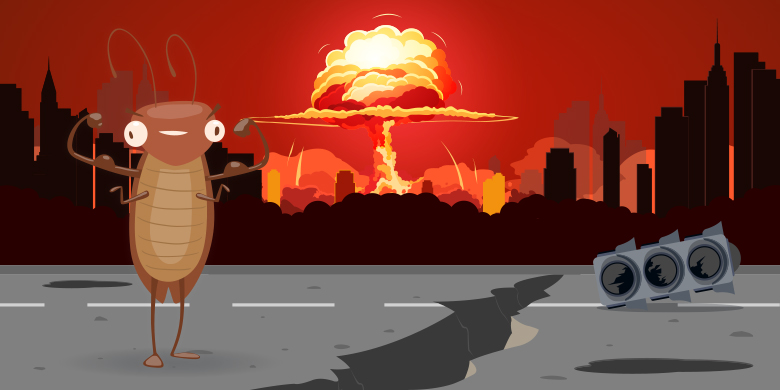
Many people have heard stories that cockroaches can live through nuclear bombs. But is this true? Can these tiny insects really survive such a huge disaster? In this article, we will explore the truth. We will learn about cockroaches, radiation, and what happens during a nuclear explosion.
Credit: www.clearfirstpestcontrol.co.uk
What Happens in a Nuclear Explosion?
A nuclear explosion is very powerful. It releases a lot of energy in a very short time. This energy comes as heat, light, and radiation. The heat and light can burn things nearby. The radiation is invisible and can hurt living things. It changes cells inside bodies. This can cause sickness or death.
When a nuclear bomb goes off, the area around it is destroyed. Buildings fall. Fires start. And many living things cannot survive. The strength of the blast and the radiation makes it hard for most creatures to live nearby.
Who Are Cockroaches?
Cockroaches are insects that live all over the world. They can be found in homes, parks, and even forests. Cockroaches are known for being tough. They eat many things and can live without food for a long time.
They also hide well. Cockroaches like dark and small places. They come out mostly at night. Because of these habits, they often avoid danger.
Why Do People Think Cockroaches Can Survive Nuclear Explosions?
The idea that cockroaches can survive nuclear blasts comes from their high resistance to radiation. Many people believe they can live through radiation doses that would kill humans. This belief spread after tests on cockroaches and other insects showed they tolerate radiation better.
Also, cockroaches were found in places affected by nuclear bombs. This made people think these bugs survived the blasts.
How Much Radiation Can Cockroaches Handle?
Radiation is measured in units called rads or grays. High doses can kill cells. Cockroaches can survive radiation doses between 10,000 to 20,000 rads. This is very high compared to humans.
| Living Thing | Radiation Dose to Kill (rads) |
|---|---|
| Humans | 400 – 1,000 |
| Cockroaches | 10,000 – 20,000 |
| Fruit Flies | 6,000 |
| Bacteria | Up to 100,000 |
This shows cockroaches can survive more radiation than humans. But remember, a nuclear explosion has more dangers than radiation.

Credit: pursuit.unimelb.edu.au
Can Cockroaches Survive the Whole Nuclear Explosion?
Radiation is only one part of a nuclear blast. The explosion also has heat, pressure, and fire. These can kill many creatures, including cockroaches.
Close to the bomb, heat and pressure are too strong. Nothing can survive there. Farther away, radiation is less, but heat and fires can still be deadly.
Cockroaches can hide in cracks, under rocks, or deep underground. These places protect them from heat and pressure. So, cockroaches far from the blast may survive.
However, cockroaches right near the explosion will not survive. The blast and fire are too strong.
What Really Happens After a Nuclear Explosion?
After a nuclear bomb explodes, the area is dangerous. Radiation stays in the soil and air. This is called fallout. It can last for days, weeks, or longer.
Cockroaches that survive the initial blast may face radiation from fallout. Their strong resistance helps them live longer than many animals.
Over time, radiation levels drop. More plants and animals return. Cockroaches can live in these areas because they are tough and adapt well.
Why Are Cockroaches So Tough?
- Slow Cell Reproduction: Cockroach cells reproduce slower than humans. Radiation harms cells that grow fast. Slower growth means less damage.
- Simple Body Structure: Their bodies are simple. This helps survive damage better.
- Ability to Hide: They hide in safe places away from heat and radiation.
- Strong Exoskeleton: Their hard shell protects from physical harm.
What About Other Insects?
Cockroaches are not the only insects that can resist radiation. Some ants, flies, and beetles also survive high radiation levels.
Insects often survive disasters better than bigger animals. Their size and habits help them stay safe.
Summary: Can Cockroaches Survive Nuclear Explosions?
To answer simply: cockroaches cannot survive the blast’s center. The heat and pressure are too strong. But cockroaches far from the blast may live. Their bodies resist radiation well. They can hide in safe places.
So, the idea that cockroaches survive nuclear bombs is partly true. They can survive radiation better than humans. But they do not survive everything in the explosion.
Why Does This Matter?
Knowing about cockroach survival helps us understand nature. It shows how some creatures adapt to danger. It also teaches us about radiation effects on living things.
This information is useful for scientists and safety workers. It helps prepare for nuclear accidents. It also helps us protect people and animals.
Final Thoughts
Cockroaches are tough insects. They resist radiation better than many creatures. But nuclear explosions are very powerful. No creature can survive everything in the blast.
Still, cockroaches show us how life can be strong. They remind us that nature finds ways to survive.
Frequently Asked Questions
Can Cockroaches Survive A Nuclear Explosion Blast?
Cockroaches can survive radiation better than humans but not the blast’s heat and force. The explosion’s intense heat would kill them instantly.
How Much Radiation Can Cockroaches Handle?
Cockroaches can survive radiation doses up to 10 times higher than humans. Their cells repair radiation damage more effectively.
Why Are Cockroaches Considered Radiation-resistant?
Cockroaches reproduce fast and have simple bodies that repair radiation damage quickly. This makes them tougher against radiation.
Do Cockroaches Survive In Nuclear Fallout Areas?
Cockroaches can live in areas with nuclear fallout if radiation levels drop enough. They hide in cracks and dark places.