
Have you ever wondered how cockroaches multiply so quickly and seem impossible to get rid of? Understanding cockroach reproduction is key to controlling their population in your home.
You’ll discover how these resilient pests breed, why they multiply fast, and what you can do to stop them. Keep reading to unlock the secrets behind their survival and protect your space for good.
Credit: responsiblepestcontrol.net
Cockroach Mating Habits
Cockroach mating habits reveal fascinating behaviors that help these insects reproduce successfully. Understanding these habits sheds light on how cockroach populations grow rapidly. The process involves specific actions performed by both males and females.
Courtship Behaviors
Male cockroaches start by searching for a female. They release special smells called pheromones to attract her. The male then performs a series of movements, like waving his antennae. These actions signal his readiness to mate. The female watches closely to decide if the male is a good match.
Mating Process
Once the female accepts, the pair moves to a safe spot. The male uses his body to align with the female. He transfers a packet of sperm called a spermatophore. This process can last several minutes. After mating, the female stores the sperm to fertilize her eggs later. This efficient method helps cockroaches reproduce quickly and survive in many environments.
Credit: trashcansunlimited.com
Egg Laying And Development
Cockroach reproduction starts with egg laying and development. Female cockroaches produce eggs packed in a special case. This process ensures the survival of their young in different environments. Understanding egg laying helps explain how cockroach populations grow fast.
Ootheca Formation
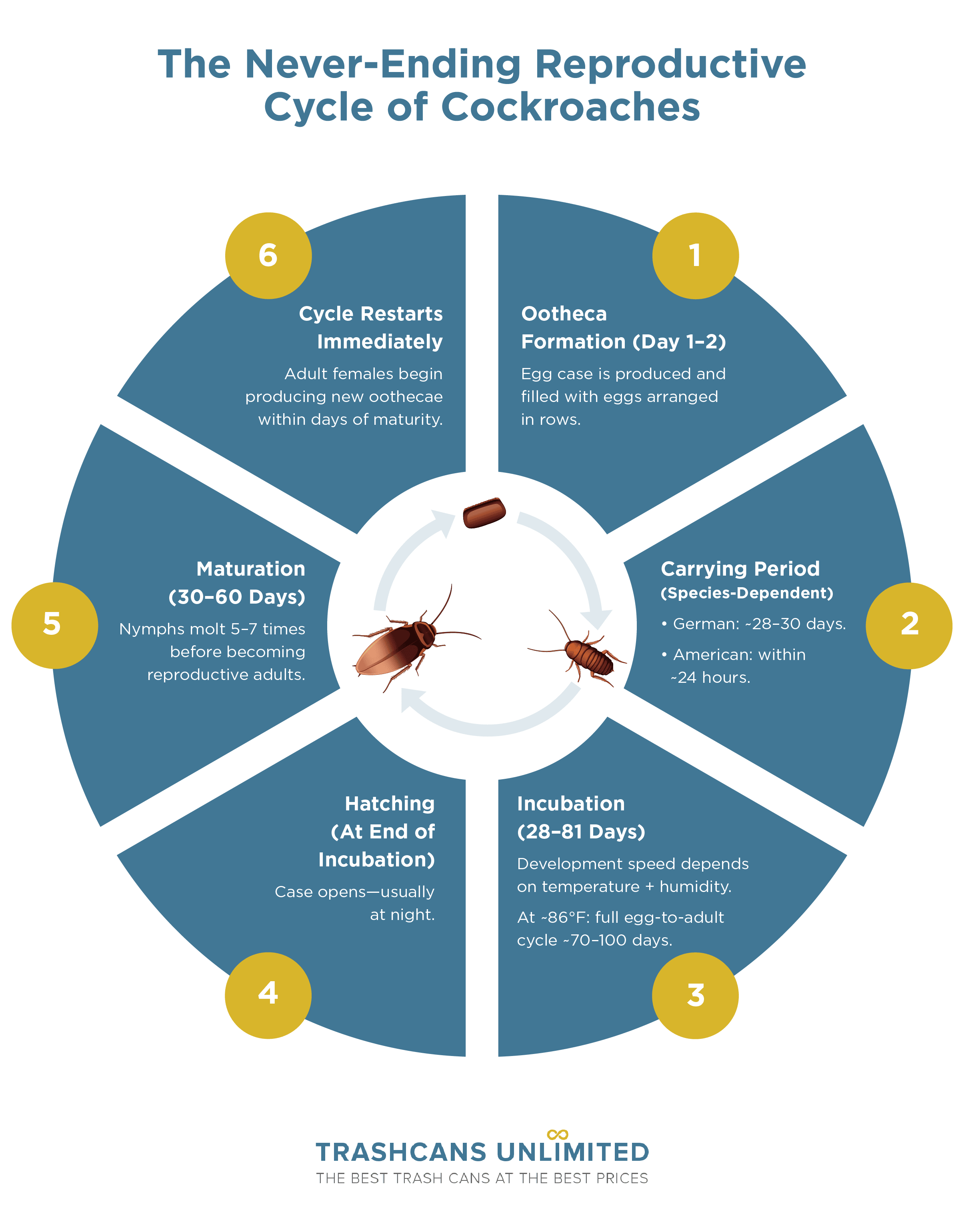
The egg case is called an ootheca. It is a small, hard shell that protects the eggs inside. Female cockroaches create the ootheca by folding layers around the eggs. This case holds many eggs, usually between 10 and 50. The ootheca shields the eggs from harm and drying out. Some species carry the ootheca until hatching. Others drop it in safe places.
Incubation Period
The incubation period is the time eggs stay inside the ootheca. It lasts from weeks to over a month. Temperature and humidity affect how fast eggs develop. Warmer conditions speed up hatching, while cold slows it down. After incubation, tiny nymphs hatch from the eggs. These young cockroaches start growing quickly to become adults. The short incubation helps cockroach numbers rise rapidly.
Nymph Stages
The nymph stage is a crucial part of cockroach reproduction. Nymphs are young cockroaches that hatch from eggs. They look like small adults but lack wings and full size. During this stage, they grow through several steps. Each step helps them get closer to adulthood.
Molting Process
Molting is how nymphs grow. They shed their outer skin several times. This process allows their bodies to expand. Each molt reveals a larger, more developed nymph. The skin splits open, and the nymph crawls out. After molting, the new skin is soft and pale. It hardens after some time, protecting the nymph again.
Growth Timeline
The nymph stage lasts several weeks. It depends on temperature and food availability. Usually, nymphs molt six to eight times. Each molt brings them closer to adult size. The entire growth process can take from one to three months. After this, they become mature cockroaches ready to reproduce.
Factors Boosting Reproduction
Cockroach reproduction depends on several key factors. These factors help cockroaches grow their population fast. Understanding these can explain why cockroach infestations spread quickly. Two main areas influence their reproduction: environment and diet.
Environmental Conditions
Cockroaches thrive in warm, moist places. These conditions speed up their breeding cycle. Dark, hidden spots protect their eggs and young. Poor sanitation creates more food and shelter. Crowded areas with many hiding spots boost reproduction. Temperature around 70-80°F is ideal for egg hatching. Dry or cold places slow down their growth.
Diet And Nutrition
Cockroaches eat almost anything. They prefer sugary and starchy foods. Good nutrition helps females produce more eggs. A varied diet increases their survival chances. Lack of food slows down reproduction rates. Access to water is also essential. Healthy cockroaches reproduce faster and in larger numbers.
Survival Strategies
Cockroaches have thrived for millions of years. Their survival depends on clever strategies. These strategies help them reproduce and live in tough conditions. Understanding these can explain why cockroach populations grow fast.
Adaptability
Cockroaches can live in many places. They adjust to different temperatures and food sources. This ability helps them survive in homes, sewers, and outdoors. Their bodies resist poisons that kill other insects. They also change their habits to avoid danger. This adaptability makes them very hard to control.
Predator Avoidance
Cockroaches use quick movements to escape predators. They hide in dark, small spaces during the day. At night, they come out to search for food. Their flat bodies let them squeeze into cracks and crevices. They also sense vibrations, warning them of nearby threats. These tactics keep them safe from birds, spiders, and humans.
Credit: cockroachcare.com
Impacts Of Rapid Growth
Cockroaches reproduce very fast. This rapid growth affects homes and businesses a lot. It causes many problems that need quick action. Understanding these impacts helps in controlling these pests better.
Rapid reproduction leads to more cockroaches in less time. Their numbers can grow beyond what most people expect. This growth creates challenges for keeping spaces clean and safe.
Population Explosion
A single cockroach can produce hundreds of offspring in months. This causes a sudden rise in their numbers. Small infestations can turn into large ones quickly. These pests spread fast through cracks and crevices. A big population means more damage and health risks.
Challenges For Pest Control
Fast cockroach growth makes pest control harder. Treatments must be frequent to stop new cockroaches. Some pests become resistant to common sprays. Finding all hiding spots is tough with many roaches. Control needs patience and careful planning to work well.
Frequently Asked Questions
How Do Cockroaches Reproduce So Quickly?
Cockroaches reproduce rapidly through egg cases called oothecae. Each contains multiple eggs. Females carry these cases until hatching. This ensures protection and increases offspring survival rates.
What Is The Lifespan Of A Cockroach Egg?
Cockroach eggs typically hatch within 1 to 2 months. Temperature and humidity affect this duration. Warmer conditions speed up the process. After hatching, nymphs emerge and begin growing.
How Many Eggs Does A Female Cockroach Lay?
A female cockroach can lay 10 to 50 eggs per ootheca. She produces several oothecae during her lifetime. This high egg count leads to rapid population growth.
Do Cockroaches Reproduce Without Mating?
Most cockroach species require mating for reproduction. However, some can reproduce via parthenogenesis. This means females produce offspring without males. It is less common but increases survival chances.
Conclusion
Cockroach reproduction happens fast and often. These insects lay many eggs in small cases. Each egg case holds several baby cockroaches. They grow quickly and hide well. Understanding this helps control their spread. Stay alert and keep areas clean. This reduces places for cockroaches to live.
Knowing their habits helps protect your home. Simple steps can make a big difference. Keep pests away and stay safe.