Are you worried that your clothes might be hiding bed bugs? These tiny pests can cause big problems, but the good news is that you don’t have to toss your wardrobe or panic.
Knowing how to remove bed bugs from clothes quickly and effectively can save you time, money, and stress. You’ll discover simple steps that work, so you can protect yourself and your home from these stubborn bugs once and for all.
Keep reading—your clothes and peace of mind depend on it.
.png?r=RGXqEV3/M/U=)
Credit: plunketts.net
Identify Bed Bugs On Clothes
Identifying bed bugs on clothes is a key step in stopping their spread. These tiny pests can hide in your garments and cause discomfort. Knowing how to spot them helps protect your home and health.
Common Signs Of Infestation
Look for small, dark spots on your clothes. These spots may be bed bug feces. You might also see tiny blood stains from crushed bugs. Sometimes, bed bugs themselves appear as small, reddish-brown insects. A musty, sweet smell can also signal their presence.
Where Bed Bugs Hide In Clothing
Bed bugs often hide in seams and folds of fabric. Check collars, cuffs, and pockets closely. They prefer dark, tight spaces where they stay safe. Inside suitcase linings and backpacks are common hiding spots too. Inspect clothes stored in drawers or closets carefully.
Prepare Clothes For Treatment
Preparing clothes for bed bug treatment is the first step to stop these pests. Proper preparation helps kill bed bugs hiding in fabric. It also stops them from spreading to other areas. Follow these steps carefully before starting any treatment.
Sorting Infected Items
Start by separating clothes that show signs of bed bugs. Check for small dark spots or tiny bugs on fabric. Put these clothes in a separate bag or container. Avoid mixing them with clean clothes. Sorting helps focus treatment where it is needed most.
Handling Precautions
Wear gloves to protect your hands during sorting and treatment. Avoid shaking clothes to prevent spreading bed bugs. Keep infected items away from other belongings. Use sealed bags or containers for transport or storage. Clean your hands and tools after handling clothes.
Effective Washing Techniques
Washing clothes is a key step to remove bed bugs effectively. Using the right washing methods can kill bed bugs and their eggs. This section explains the best ways to wash clothes to get rid of these pests.
Temperature Settings That Kill Bed Bugs
Heat is a powerful weapon against bed bugs. Washing clothes in hot water kills bed bugs and their eggs. Use water with a temperature of at least 120°F (49°C). This temperature is high enough to destroy bed bugs quickly. Cold or warm water will not work well. Dry clothes on the highest heat setting for at least 30 minutes. The heat from the dryer finishes the job by killing any bugs left behind.
Recommended Detergents And Additives
Choose a strong detergent that cleans deeply. Regular laundry detergent is usually enough to remove bed bugs from clothes. Avoid delicate or mild detergents as they may not clean thoroughly. Adding a cup of white vinegar to the rinse cycle helps kill bed bugs too. Vinegar disrupts their bodies and reduces their chance to survive. Avoid fabric softeners, as they do not help against bed bugs and can coat clothes, trapping bugs inside.

Credit: www.wikihow.com
Drying And Heat Treatment
Drying and heat treatment is a powerful way to kill bed bugs hiding in clothes. Bed bugs cannot survive high temperatures, making heat a safe and effective method. This process targets both bugs and their eggs, stopping infestations from spreading further.
Using High Heat In Dryers
Place infested clothes in a dryer on the hottest setting. Heat above 120°F (49°C) kills bed bugs quickly. Run the dryer for at least 30 minutes to ensure all bugs die. Dryers reach this temperature easily and treat clothes evenly.
Check care labels before drying. Some fabrics may shrink or get damaged. Use a gentle cycle with high heat for delicate items. After drying, store clothes in sealed bags to avoid re-infestation.
Alternative Heat Methods
Heat treatment is not only for dryers. You can use steam cleaners on clothes and seams. Steam at 130°F (54°C) kills bed bugs instantly. Hold the steamer close but avoid soaking fabric.
Sunlight also helps. Place clothes in direct sun for several hours. The heat and UV rays weaken and kill bed bugs. This method works best on hot, sunny days.
Another option is heat chambers or portable heat boxes. These devices heat clothes evenly to the necessary temperature. They are useful for items that cannot go in a dryer.
Freezing As A Treatment Option
Freezing is a simple and effective way to kill bed bugs on clothes. Bed bugs cannot survive in very cold temperatures. By freezing infested clothes, you can stop these pests without using chemicals. This method is safe for most fabrics and easy to do at home. It works by exposing bed bugs to cold long enough to kill all life stages, including eggs.
Safe Freezing Practices
Place clothes in a sealed plastic bag. This prevents moisture damage and stops bugs from escaping. Use a freezer that reaches at least 0°F (-18°C). Avoid overloading the freezer to keep air circulating. Label the bag with the date to track freezing time. After freezing, wash clothes in hot water for extra safety.
Duration For Effective Killing
Keep clothes in the freezer for at least four days. This time kills all bed bugs and eggs. Shorter freezing times may not be enough. For best results, freeze clothes for seven days. This ensures complete elimination of bed bugs. Always check your freezer temperature before starting.
Chemical Treatments For Clothes
Chemical treatments can help remove bed bugs from clothes effectively. These treatments use special insecticides designed to kill bed bugs and their eggs. Using chemicals on clothes requires care to avoid damage or health risks. Always follow instructions on the product label. Chemical treatments are often used when washing and heat drying are not enough.
Approved Insecticides
Choose insecticides made for use on fabrics. Products with pyrethroids or permethrin are common. They kill bed bugs quickly and stay effective for days. Avoid using insecticides not labeled for clothes. Such products may harm fabrics or cause skin irritation. Look for EPA-approved sprays for bed bugs. These are tested and safe when used correctly.
Usage And Safety Tips
Spray clothes outdoors or in a well-ventilated area. Use gloves to protect your skin. Apply the insecticide evenly on all surfaces of the clothes. Allow the clothes to dry completely before wearing or storing. Do not mix different chemicals. Keep children and pets away from treated clothes. Store leftover insecticides safely and out of reach. Follow all safety instructions on the label for best results.
Preventing Reinfestation
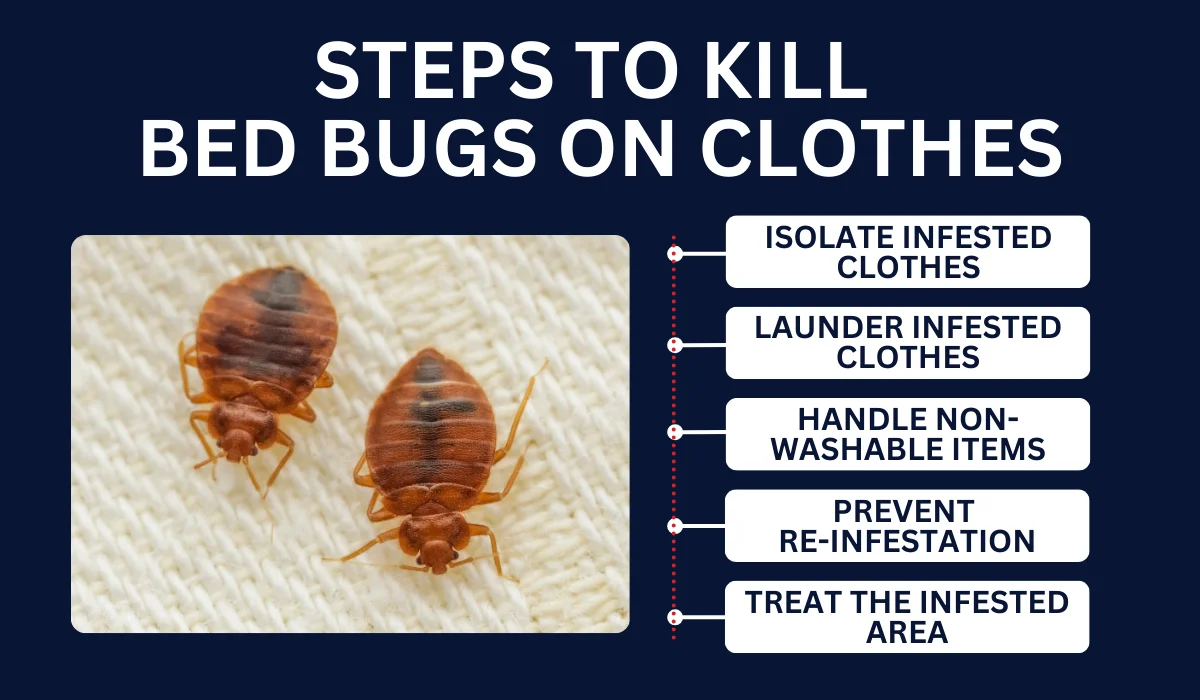
Preventing bed bugs from returning to your clothes is key after removing them. Bed bugs hide in small cracks and fabric folds. They can quickly spread if you don’t take proper steps. Keeping your clothes safe means careful storage and regular checks. These habits stop bed bugs from coming back and protect your home.
Storage Solutions
Store clean clothes in sealed plastic bags or airtight containers. Use vacuum bags to reduce space and block bugs. Keep storage areas dry and cool to discourage bed bugs. Avoid piles of clothes on the floor or in open bins. Use clean, smooth surfaces for storing clothes. This helps catch bugs early and prevents them from hiding.
Regular Inspection Routines
Check your clothes often for signs of bed bugs. Look for small dark spots or tiny bugs in seams. Inspect bags and storage areas regularly. Wash clothes in hot water after wearing them. Use a dryer on high heat to kill any hidden bugs. Early detection stops bed bugs from spreading again. Stay consistent with these checks to keep your clothes safe.
Credit: www.lajaunies.com
When To Seek Professional Help
Removing bed bugs from clothes can be challenging. Sometimes, the problem is too big to handle alone. Knowing when to call a professional helps save time and stress. Experts have tools and skills to deal with tough infestations. They make sure bed bugs do not come back.
Signs Of Severe Infestation
Bed bugs leave clear signs. You may see many bugs on clothes or bedding. Tiny blood stains or dark spots might appear on fabric. A strong, musty smell can also signal a big problem. Bites on your skin, especially in lines, show bugs are active. If these signs cover many rooms, the infestation is severe.
Choosing A Pest Control Service
Pick a pest control service with good reviews and experience. Ask if they specialize in bed bug removal. Check if they use safe, effective treatments for clothes and homes. Compare prices and services before deciding. A reliable service explains the process clearly and answers questions. Professional help ensures bed bugs are removed fully and safely.
Frequently Asked Questions
How Can I Kill Bed Bugs On Clothes Effectively?
The best way to kill bed bugs on clothes is by washing them in hot water above 120°F. Then, dry clothes on high heat for at least 30 minutes to ensure all bugs and eggs die.
Can Freezing Clothes Remove Bed Bugs Completely?
Freezing clothes can kill bed bugs if kept below 0°F for at least four days. However, freezing may not be as reliable as heat treatment and should be combined with other methods.
Is It Safe To Use Insecticides On Clothing?
Using insecticides directly on clothing is not recommended as chemicals may harm your skin. Instead, focus on washing and drying clothes at high temperatures to remove bed bugs safely.
How To Prevent Bed Bugs From Infesting My Clothes?
Store clothes in sealed plastic bags or airtight containers when traveling or after treatment. Regularly inspect and wash clothes to prevent bed bugs from settling and spreading.
Conclusion
Removing bed bugs from clothes takes careful steps and patience. Wash clothes in hot water to kill bugs and eggs. Dry them on high heat for at least 30 minutes. Seal clean clothes in bags to keep bugs away. Check clothes and laundry areas often to stop re-infestation.
Clean your home regularly to reduce hiding spots. These simple actions help protect your clothes and family. Stay consistent and act quickly for the best results. Bed bugs don’t stand a chance with these easy tips.