If you see small insects flying or crawling around your home, you might wonder if they are termites or ants. Both insects look similar at first. But they are very different. It is important to know how to tell termites from ants. This can help you protect your home from damage.
Why Is It Important to Tell Termites from Ants?
Termites and ants live in many places. But termites can cause a lot of damage to wood. They eat wood from inside. This can make houses weak and unsafe. Ants, on the other hand, usually do not harm wood. They mostly look for food.
Knowing which insect is which helps you decide what to do next. If you have termites, you need to act fast to stop them. If you have ants, you may only need simple ways to get rid of them.
Look at the Body Shape
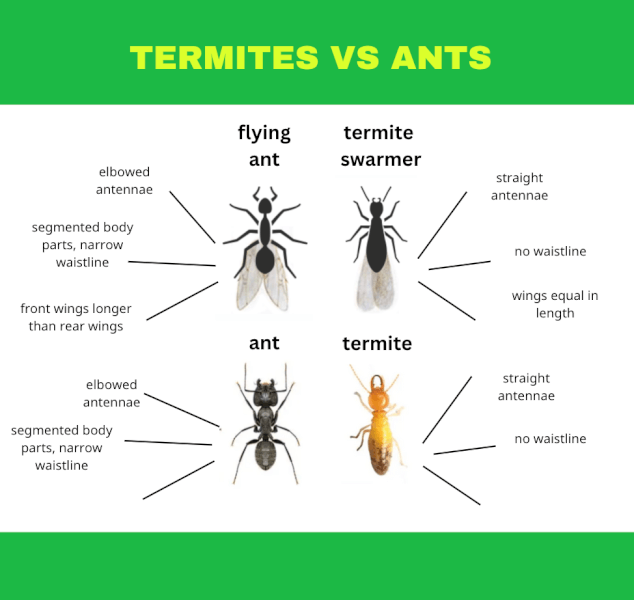
One of the easiest ways to tell termites from ants is by their body shape. Let’s look at the main differences.
| Feature | Termites | Ants |
|---|---|---|
| Waist | Wide and thick, no narrow section | Thin and pinched, looks like a small waist |
| Body Color | Light color, cream or white | Dark color, brown or black |
| Antennae | Straight and beaded | Elbowed and bent |
| Wings (if present) | Two pairs of equal size wings | Front wings larger than back wings |
See the difference? Termites have a thick waist. Ants have a thin waist. Termites are light colored. Ants are dark.
Check the Antennae Shape
Antennae are the feelers on an insect’s head. Termite antennae are straight. They look like a string of beads. Ant antennae bend in the middle. They look like an elbow.
This is a small detail but very helpful. If you look closely, you can see the difference.
Look at the Wings
Sometimes, you will see flying insects. These are the “swarmers.” They leave their colony to start new ones.
Termite swarmers have two pairs of wings. Both pairs are the same length. The wings look thin and equal. When termites fly, their wings are easy to break off.
Ant swarmers also have two pairs of wings. But their front wings are bigger than the back wings. Their wings are strong and usually stay on.
Examine the Legs
Termites have short legs. Ants have longer legs that help them run fast. When you see an insect moving quickly, it is probably an ant.
Termites move slower. They stay inside wood or soil most of the time.
:max_bytes(150000):strip_icc()/difference-between-ants-and-termites-2656329-color-V1-e435cccc1808445bb51cb080d5e8d2ed.png)
Credit: www.thespruce.com
Observe the Behavior
How the insects act can help you know who they are.
- Termites mostly live inside wood or underground.
- They avoid light and stay hidden.
- Termites eat wood and cause damage.
- Ants build nests outside or inside walls.
- They look for food and water.
- Ants can be seen walking in lines.
If you see insects flying near lights at night, they might be termites. If you see insects running fast in lines during the day, they are likely ants.
Credit: www.gunterpest.com
Check the Damage
If you have damage in your wood, it may tell you which insect lives there.
Termite damage:
- Wood looks hollow inside.
- There are thin tunnels under the surface.
- Wood may feel soft and crumbly.
- Sometimes mud tubes appear on walls or wood.
Ant damage:
- Usually no wood damage.
- Sometimes carpenter ants dig wood, but it looks different.
- Carpenter ants make smooth tunnels and piles of wood shavings.
If you see mud tubes or hollow wood, it is a sign of termites.
Different Types of Ants and Termites
Not all ants and termites look the same. Here are some common types you may find.
| Insect | Common Types | Notes |
|---|---|---|
| Termites | Subterranean, Drywood, Dampwood | Subterranean live underground. Drywood live in dry wood. |
| Ants | Carpenter Ants, Pavement Ants, Fire Ants | Carpenter ants can damage wood. Fire ants bite. |
How to Check Your Home
You can look for signs of termites or ants yourself. Here are some easy steps.
- Look at small insects near windows or doors.
- Check wood for holes, tunnels, or soft spots.
- Look for mud tubes on walls or foundation.
- Check if insects fly near lights at night.
- See if ants walk in lines during the day.
If you see many insects and wood damage, you might have termites. If you see ants looking for food, you have ants.
Why Termites Are Dangerous
Termites can cause serious damage to homes. They eat wood slowly but strongly. Over time, they can make walls and floors weak.
Termite damage can cost a lot to fix. They live hidden, so you may not see them early. This is why it is important to check your home often.
What to Do If You Find Termites or Ants
If you find termites, call a pest expert. They know how to stop termites safely. Do not try to fix big termite problems alone.
If you find ants, you can try simple ways first. Clean food spills, block their entry points, or use ant bait.
But if ants keep coming back, you may need help from a professional.
Summary: Easy Ways to Tell Termites from Ants
| Feature | Termites | Ants |
|---|---|---|
| Body Waist | Thick and straight | Thin and pinched |
| Body Color | Light, cream or white | Dark, brown or black |
| Antennae | Straight and beaded | Bent or elbowed |
| Wings | Two pairs, equal length | Two pairs, front longer |
| Behavior | Slow, hidden in wood | Fast, walk in lines |
| Damage | Hollow wood, mud tubes | No wood damage (except carpenter ants) |
Remember these simple tips. They will help you spot termites or ants. Protect your home by knowing the difference.
Frequently Asked Questions
How Can I Visually Distinguish Termites From Ants?
Termites have straight antennae, while ants’ antennae are bent. Termites’ bodies are thick and uniform, ants’ bodies have narrow waists.
What Are The Key Behavioral Differences Between Termites And Ants?
Termites prefer wood and stay hidden inside it. Ants are often seen foraging outside and build visible nests.
Why Is It Important To Tell Termites Apart From Ants?
Termites cause serious damage to wood structures. Identifying them early helps protect your home and avoid costly repairs.