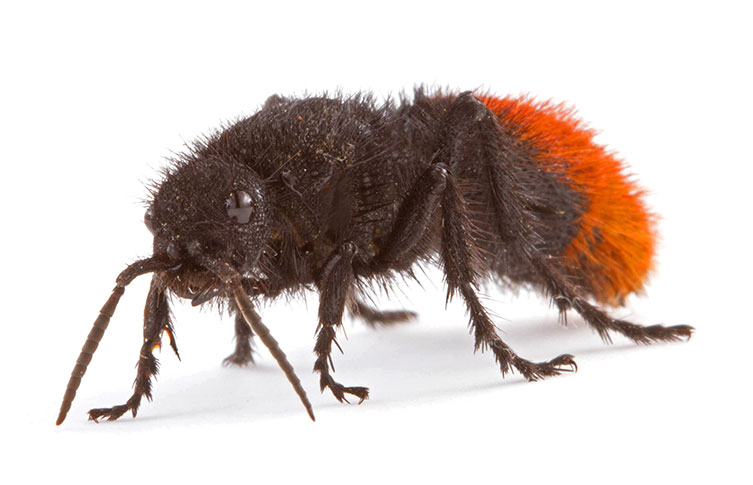
Velvet ants are not really ants. They are a type of wasp. But they look like ants because of their body shape. They have bright colors, often red or orange. This helps warn other animals that they can sting. Velvet ants live in dry places like deserts and fields.
Understanding Velvet Ants
Velvet ants are also called “cow killers” because their sting is very strong. But they do not attack cows or big animals. They mostly live on the ground. Female velvet ants cannot fly because they do not have wings. Male velvet ants have wings and can fly.

Credit: www.newscientist.com
What Do Velvet Ants Eat?
Velvet ants eat different things during their life. Their food depends on if they are adults or larvae (baby velvet ants).
Adult Velvet Ants’ Food
Adult velvet ants mainly eat nectar. Nectar is a sweet liquid made by flowers. They use their mouth to suck nectar from flowers. Nectar gives them energy to move and live.
Sometimes, adult velvet ants also eat honeydew. Honeydew is a sticky sweet liquid made by small bugs called aphids. These bugs live on plants and make honeydew as they eat plant juice.
So, adult velvet ants mostly eat sweet liquids. They do not eat other insects or meat as adults.
Velvet Ant Larvae Food
The larvae of velvet ants eat very differently. Baby velvet ants do not find food by themselves. Instead, their mothers help them.
Female velvet ants lay eggs inside the nests of other insects. Usually, they choose ground-nesting bees or wasps. The velvet ant larva hatches and eats the host insect’s egg or larva. This means velvet ant larvae are parasites.
The host insect’s larvae are the main food for velvet ant larvae. They slowly eat the host from inside the nest. This is how they get enough food to grow big and strong.
Credit: www.nhm.ac.uk
Summary of Velvet Ant Diet
| Life Stage | Food Type | Description |
|---|---|---|
| Adult | Nectar and Honeydew | Sweet liquids from flowers and aphids for energy. |
| Larva | Host Insect Larvae | Feeds on eggs or larvae of bees or wasps in nests. |
Why Do Velvet Ants Eat This Way?
Velvet ants have a special life cycle. Their larvae need a lot of protein to grow. The host insect larvae are full of protein. This helps velvet ant larvae become healthy adults.
Adult velvet ants need energy to move and find mates. Nectar and honeydew provide this energy quickly. These sweet liquids help velvet ants fly or walk long distances.
Where Do Velvet Ants Find Their Food?
Adult velvet ants look for flowers to find nectar. They visit many flowers in open fields or deserts. They also look for aphids to find honeydew.
Female velvet ants search for nests of ground bees and wasps. They find these nests by digging in dry soil. This is where they lay eggs for their larvae.
Interesting Facts About Velvet Ants
- Velvet ants use their bright colors to warn predators.
- Only female velvet ants have a strong sting.
- Larvae eat the host insect slowly to grow strong.
- Adult velvet ants prefer sweet liquids for energy.
- They live mostly in dry and sandy places.
How Velvet Ants Help Nature
Velvet ants play a role in nature. By feeding on nectar, they help pollinate flowers. Pollination helps plants make seeds and grow new plants.
Also, velvet ants control the population of some bees and wasps. This keeps nature balanced. Too many bees or wasps can be harmful in some areas.
Frequently Asked Questions
What Do Velvet Ants Mainly Eat In The Wild?
Velvet ants feed mostly on insect larvae, especially those of ground-nesting bees and wasps. They use their strong jaws to eat these larvae.
Do Velvet Ants Eat Plants Or Only Insects?
Velvet ants are carnivores and do not eat plants. Their diet consists mainly of other insects’ larvae.
How Do Velvet Ants Find Their Food Sources?
Velvet ants use their strong sense of smell to locate nests of bees and wasps. They then invade these nests to feed on larvae.
Conclusion
Velvet ants have a unique diet. Adults eat sweet liquids like nectar and honeydew. Larvae eat other insect larvae inside nests. This diet helps velvet ants live and grow well.
Next time you see a bright red velvet ant, remember its special way of eating. It is a small but important part of nature’s cycle.