
Ticks are tiny bugs that can cause big problems. One worry many people have is Lyme disease. But do larva ticks carry Lyme disease? Let’s explore this question in simple words.
What Are Larva Ticks?
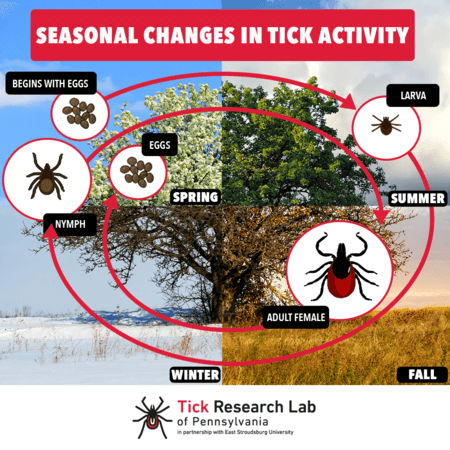
Ticks have four life stages:
- Egg
- Larva
- Nymph
- Adult
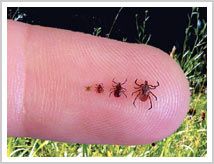
Larva ticks are very small. They are about the size of a poppy seed. After they hatch from eggs, they become larva. At this stage, ticks have six legs. Later, they grow eight legs in the nymph and adult stages.
How Do Ticks Spread Lyme Disease?
Lyme disease is caused by bacteria called Borrelia burgdorferi. Ticks get this bacteria when they bite animals like mice or deer. Then, ticks can pass the bacteria to humans through their bite.
Tick Life Cycle And Infection
| Tick Stage | Number of Legs | Can It Carry Lyme Disease? | How Does It Get Infected? |
|---|---|---|---|
| Egg | 0 | No | Not applicable |
| Larva | 6 | No | Not infected yet |
| Nymph | 8 | Yes | Infected during larva feeding |
| Adult | 8 | Yes | Infected as larva or nymph |
Credit: www.ticklab.org
Do Larva Ticks Carry Lyme Disease?
The short answer is: larva ticks do not carry Lyme disease. Why? Because larva ticks have not fed on animals yet. They hatch from eggs and need their first blood meal to grow.
Larva ticks hatch clean. They do not have Lyme bacteria inside. They become infected only if they bite an animal carrying the bacteria. This usually happens during their first feeding.
Credit: www.lymedisease.org
How Does a Tick Become Infected?
When a larva tick bites a mouse or small animal with Lyme bacteria, it can get infected. After this bite, the tick becomes a nymph. The nymph stage can then pass Lyme disease to humans.
So, larva ticks themselves are not a direct risk for Lyme disease. But after they feed on infected animals, they become dangerous in the next stage.
Why Are Nymph and Adult Ticks More Dangerous?
- Nymph ticks are small but can carry Lyme bacteria.
- Adult ticks are larger and also can spread Lyme disease.
- Both stages have eight legs and need blood meals to grow or reproduce.
Because nymphs are small, people often do not see or feel their bites. This makes nymphs a common cause of Lyme disease in humans.
Signs of Lyme Disease From Tick Bites
If bitten by an infected tick, symptoms may appear in days or weeks. Common signs include:
- Red rash that looks like a bull’s eye
- Fever and chills
- Headache
- Fatigue (feeling very tired)
- Muscle and joint pain
Early treatment with antibiotics can help stop Lyme disease from getting worse.
How to Protect Yourself From Tick Bites
Ticks live in grassy and wooded areas. You can protect yourself by:
- Wearing long sleeves and pants outside
- Using insect repellent that works on ticks
- Checking your body for ticks after being outdoors
- Removing any ticks quickly and carefully
Remember, larva ticks are tiny and hard to see. But they are less likely to carry Lyme disease.
How to Remove a Tick
If you find a tick on your skin, remove it right away. Follow these steps:
- Use fine-tipped tweezers.
- Grab the tick close to your skin.
- Pull upward slowly and steadily.
- Do not twist or squeeze the tick.
- Clean the bite area with soap and water.
Save the tick in a container if you want to show a doctor later.
Summary
Larva ticks do not carry Lyme disease because they have not fed yet.
They only get infected after biting an infected animal.
Nymph and adult ticks can carry and spread Lyme disease.
Protect yourself by avoiding tick bites and checking your body.
Early tick removal helps reduce risk of Lyme disease.
Understanding ticks helps keep you safe during outdoor fun.